Newsletter Subscribe
Enter your email address below and subscribe to our newsletter

 ByJohn A
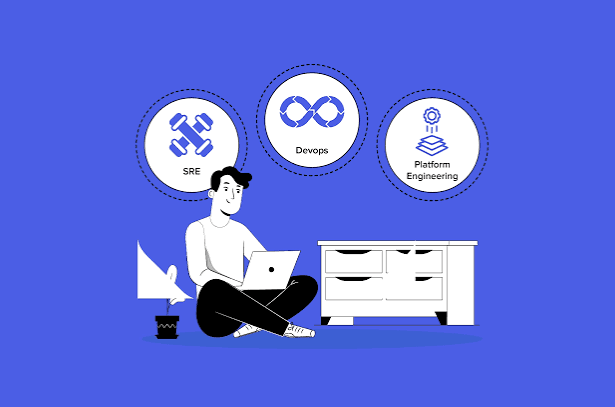
Platform engineering builds a reusable, self-service platform that abstracts toil and codifies governance for product teams, while DevOps concentrates on automating, coordinating, and measuring the handoffs between development and operations. Together, they emphasize reliability, security basics, and scalable delivery through abstractions and guardrails. This pairing reframes when and how automation is applied, but the practical lines still matter. The results hinge on alignment across teams, metrics, and governance—and what happens next could redefine how a firm operates at scale.
Platform engineering is the discipline of building and operating the platform that enables product teams to deliver software reliably and at scale, rather than creating bespoke pipelines for each project. It abstracts toil, automates repeatable patterns, and codifies governance.
The distinction remains: platform engineering enables freedom through reliability, while devops misconceptions risk misaligned ownership and fragmented tooling.
DevOps, in practice, is the discipline of coordinating development and operations activities to deliver software faster, more reliably, and with repeatable outcomes.
The team-oriented impact centers on an automation mindset guiding workflows, reducing manual toil, and enabling repeatable deployments.
Collaboration patterns emerge as shared responsibility, informed by telemetry and abstractions, ensuring reliability, resilience, and freedom to iterate without compromising governance or quality.
The synergy between platform engineering and DevOps emerges when automation and governance co-evolve, aligning scalable infrastructure with repeatable software delivery. In practice, teams leverage abstractions to reduce toil, enforce Platformsecurity basics, and embed reliability through continuous validation.
Costgovernance strategies, guardrails, and self-service enable freedom while preserving compliance, ensuring resilient pipelines and predictable outcomes without sacrificing autonomy or speed.
How can teams synchronize platform engineering and DevOps into a streamlined, self-service workflow that scales with demand? A simple framework pairs governance with automation, defining self-service interfaces and policy-aware defaults.
Platform governance codifies guardrails while preserving developer autonomy, enabling repeatable pipelines and abstractions.
Reliability is baked in through target SLAs, metrics, and automated validation, delivering scalable, freedom-forward operations.
ROI measurement for platform engineering is analyzed by isolating value from tooling ROI metrics and noting ROI measurement pitfalls; it emphasizes automation, abstractions, reliability, and freedom-seeking teams, quantifying efficiency, uptime, error reduction, and deployment velocity without platform bias.
The skills gap that slows adoption includes proficiency in automation, platform abstractions, and reliability engineering, creating adoption challenges. Teams require scalable tooling, governance, and observability practices to achieve autonomous delivery while maintaining freedom and controlled risk.
DevOps becomes a hindrance when friction slows delivery, creating speed bottlenecks; automation-focused teams mitigate this by embracing abstractions and reliability, preserving freedom while reducing toil, yet avoiding over-engineering that reintroduces DevOps friction and delays.
See also: katrnewscom
Governance adapts by codifying measurable governance metrics and clarifying platform ownership, enabling automation and abstractions to scale reliability. It supports freedom-seeking teams while enforcing guardrails, ensuring reproducibility, and accelerating delivery through self-serve, policy-driven processes.
One in four teams reports platform fatigue within 12 months, signaling rising operational inertia. Platform fatigue and operational inertia threaten autonomy; automation-focused abstractions-driven reliability helps, enabling freedom while reducing friction, reinforcing sustainable, scalable platform engineering practices.
In the quiet hum of automation, platform engineering builds the scaffolds that unseen teams trust. DevOps whispers through telemetry and toil-reduction, turning chaos into repeatable cadence. Together they frame abstractions as guardrails, enabling self-service without sacrificing reliability. Like a well-tuned engine, the platform delivers options; DevOps ensures performance monitors every heartbeat. When aligned, systems converge—governance becomes a feature, not a bottleneck—and resilience rises as a shared rhythm, guiding software from idea to steady, scalable reality.